10 Essential Tools Every Garage Needs (and the 3 You Can Skip)
You don't need $10,000 of Snap-on to work on your own car. These 10 essential garage tools cover 95% of jobs — and here are the 3 you can skip.
When I started working on cars, my entire kit lived in a cardboard box: a $30 socket set, a hammer, and a multimeter I borrowed from my dad. I did fine. The tools below are the ones that have actually earned their space in my garage since — the essential garage tools I reach for on every job. None of them are exotic, and most cost less than a night out. Buy these ten, skip the three at the end, and you can handle most repairs, maintenance, and light restoration work on your own car or truck.
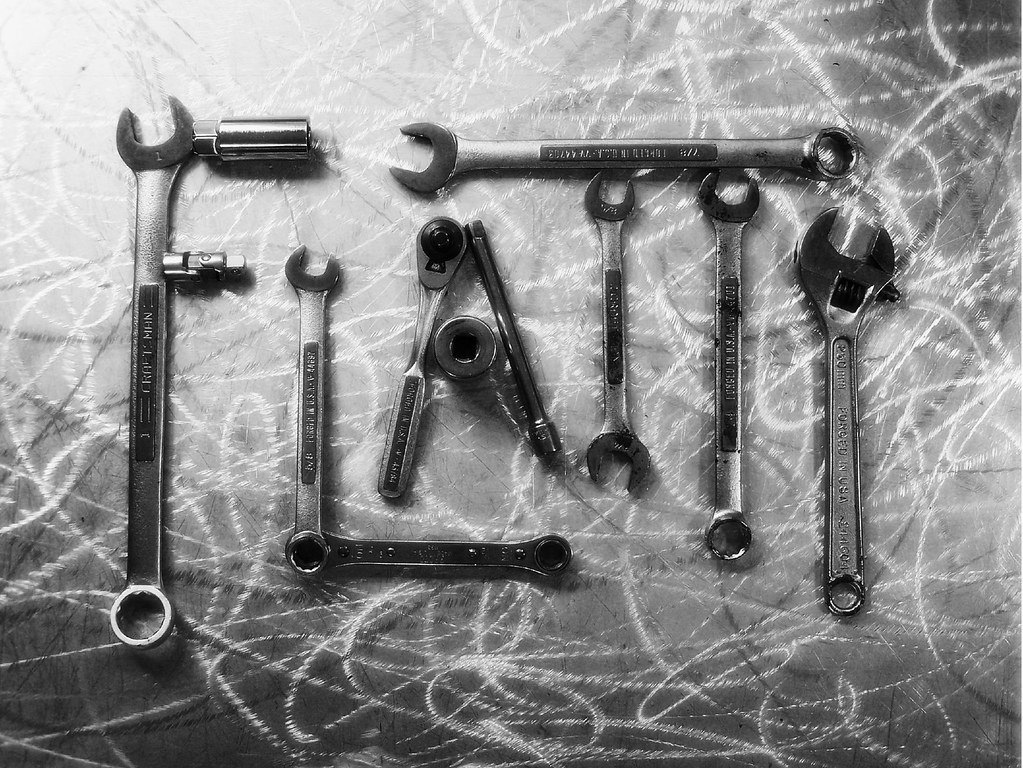
The 10 Essential Tools
Here's the full list at a glance, with honest price ranges. Treat these as planning numbers, not quotes.
| # | Tool | What it's for | Rough price range | Buy once or upgrade later |
|---|---|---|---|---|
| 1 | Floor jack and jack stands | Lifting and safely supporting the vehicle | $100-$300 (jack), $50-$150 (stands) | Buy once — get a 3-ton |
| 2 | Impact wrench | Removing stuck lug nuts and bolts | $60-$120 corded; $150-$400 cordless | Upgrade later |
| 3 | Torque wrench | Tightening fasteners to spec | $30-$150 | Buy once |
| 4 | Multimeter | Testing voltage, continuity, sensors | $20-$80 | Buy once |
| 5 | OBD2 code reader | Reading engine fault codes | $25-$100 basic; $150-$300 with live data | Upgrade later |
| 6 | Angle grinder | Cutting, grinding, wire-wheeling | $30-$80 | Buy once |
| 7 | Compressor or battery platform | Powering air or cordless tools | $150-$500 compressor; $200-$500 battery kit | Decide once, early |
| 8 | Bench vise | Holding parts still while you work | $40-$120 | Buy once |
| 9 | Headlamp and work light | Seeing what you're doing | $20-$60 | Buy once |
| 10 | Socket set, 6-point, impact-rated | The basic fasteners on every car | $50-$200 | Buy once |
A few of these deserve more detail, because the cheap version and the smart version are different tools.
The Impact Wrench Decision
A corded electric impact is the budget winner: a $60-$120 unit from Harbor Freight or similar (check current price before buying) cracks lug nuts and suspension bolts all day. Cordless — Milwaukee or DeWalt, $150-$400 with battery (check current price before buying) — is more convenient, but only makes sense once you're already in that battery system. Air impact wrenches are great, but only if you own a compressor with the output to run them; most small hobby compressors can't. And skip cheap 12-point sockets: buy 6-point, impact-rated sockets for anything you hit with an impact gun.
The Multimeter and Code Reader
A $30 multimeter (check current price before buying) tests voltage drops, grounds, and sensors. It pays for itself the first time you find a bad ground. A basic OBD2 code reader (check current price before buying) turns "check engine light" from a mystery into a specific part number. Neither needs to be expensive. The first time you diagnose a no-start with these two instead of guessing, they've earned their place.
Battery or Air: Pick Your Ecosystem Once
This decision shapes your garage for a decade, so make it once, deliberately. Air tools are cheap, powerful, and unkillable — but they need a compressor with real output (a 20-30 gallon tank minimum for impact work) and hoses everywhere. Battery tools cost more up front and the batteries die eventually, but they follow you anywhere and there's no hose. My rule: if you're starting fresh, start with one cordless brand — Milwaukee and DeWalt are the usual picks — and grow it. Buy a compressor later if a specific job demands one: media blasting, spraying, airing tires. Most hobbyists buy a compressor and use it twice; most battery platforms get used every weekend.
Buy Used, Buy Harbor Freight, Upgrade Later
You don't need Snap-on to start. The smart-money path:
- Buy the cheap version first for anything with no moving parts under load: multimeters, code readers, jack stands (as long as they're rated and stamped — never buy no-name stands).
- Buy used for quality. Estate sales and marketplace listings sell old Craftsman, Proto, and Snap-on at a fraction of new price. Hand tools are basically immortal.
- Spend real money on the three things that touch your safety or your fasteners: jack and stands, torque wrench, and sockets. A snapped stud costs more than the tool.
- Harbor Freight's Pittsburgh sockets and jacks are legitimately fine for home use (check current price before buying). The brand to be careful with is the anonymous cheap stuff on auction sites.
Pro tip: Test your torque wrench once a year — the "click test" against a known-good wrench. A torque wrench that's out of spec is worse than no torque wrench, because you'll trust it.
The 3 Tools You Can Skip
Every garage-tools list tells you to buy more. Here's what you genuinely don't need yet.
The Rolling Tool Chest
A $400-$1,500 toolbox full of $100 of tools is backwards. Start with a canvas bag or a plastic tote, and upgrade to a proper box only when you own more tools than the bag can hold. You'll know when that happens — it's a nice problem to have.
The Welding Machine
If you're not already a welder, the $200-$600 machine you buy "for that one job" will sit in the corner until you pay a shop to do the job anyway. There's a full article on choosing your first welder if you do want to learn — but learn before you buy, not after. Lincoln and Hobart make solid entry units (check current price before buying) when the time comes.
The Engine Hoist
A 2-ton engine hoist runs $150-$300 and takes up a corner of the garage forever. You need one exactly when you do an engine swap — which, for most hobbyists, happens once. Rent one or borrow one, and buy it only if you're building a second engine. The same logic applies to a lift: a $2,000-$4,000 decision plus installation, for a job you'll do a few times a year.
Common mistakes to avoid
- Using a scissor jack or a hydraulic jack alone under the car — no stands.
- Buying a 12-point socket set because it was on sale.
- Buying an air compressor before you own any air tools.
- Buying a welder to learn on instead of learning first.
- Skipping the torque wrench and guessing on lug nuts. Spec is usually 80-100 ft-lb; guess and you'll find out why.
FAQ
What's the single most important tool?
Jack stands, without question. Everything else saves you time; jack stands save your life. The floor jack that lifts the car and the stands that hold it should be the first two things you buy, and never cheap out on the stands.
Are cheap sockets OK?
Mostly yes, with two rules: buy 6-point, not 12-point (12-point rounds off nuts), and buy impact-rated sockets for anything used with an impact gun. Cheap chrome sockets shatter under impact load; cheap impact sockets don't.
Battery or air tools — which is better?
For a home garage, battery. Air wins on raw power and price per tool, but you need a serious compressor, and the hoses get old fast. Pick one battery brand and grow it; revisit air only for specific jobs like blasting or spraying.
What's the minimum budget to set up a garage?
$400-$700 gets you the ten tools above if you buy smart: Harbor Freight for jacks and sockets, a basic multimeter and code reader, and corded tools where you can. The socket set and impact wrench are the biggest line items — that's fine, they're the ones you'll use most.
Do I need a lift?
No. A floor jack and four stands get you under any car, and a creeper plus stands handles 95% of jobs. A lift is a luxury for people doing this professionally or restoring a car a year — and if you're doing that, you already know you want one.
Final Thoughts
Essential garage tools aren't about spending — they're about coverage. These ten handle the vast majority of work on any car or truck, and the three I told you to skip will still be there when you actually need them. Start with the jack, stands, sockets, and a torque wrench, and grow from there. New to the hobby? The beginner's guide to classic car restoration is the natural next read, and when you're ready to weld, the welder guide covers the options. That's the kit we run on at The Barn Find Garage — keep it simple, keep it safe, and keep turning wrenches.